Rioja, Spain: Wine & Travel Guide
Rioja is best known for its wines, but this part of northern Spain is also home to medieval hilltop towns, centuries-old wine cellars, mountain landscapes and a distinctive food culture.
From the historic wineries of Haro and the underground cellars of Laguardia to the tapas bars of Logroño, there is much to explore, whether you’re visiting for a weekend or planning a longer holiday.
Our independent guide covers the Rioja wine region, including La Rioja and Rioja Alavesa, with advice on where to stay, wineries to visit, things to do and how to plan your trip. You will also find guides to Rioja wines, their producers and where to buy them in the UK.
Plan Your Trip to Rioja

Where To Stay in Rioja
Find the right base for your holiday, from vineyard hotels and rural guest houses to city-centre accommodation.

Places To Visit
Discover Rioja’s historic towns, hilltop villages, monasteries and the countryside of the Ebro valley.

Things To Do in Rioja
Walk a section of the Camino de Santiago, explore the mountains, visit museums or join a traditional local festival.
Rioja Wine Tours & Wineries
Explore historic bodegas, book guided wine tours and discover where to enjoy a tasting.
Where Is Rioja?
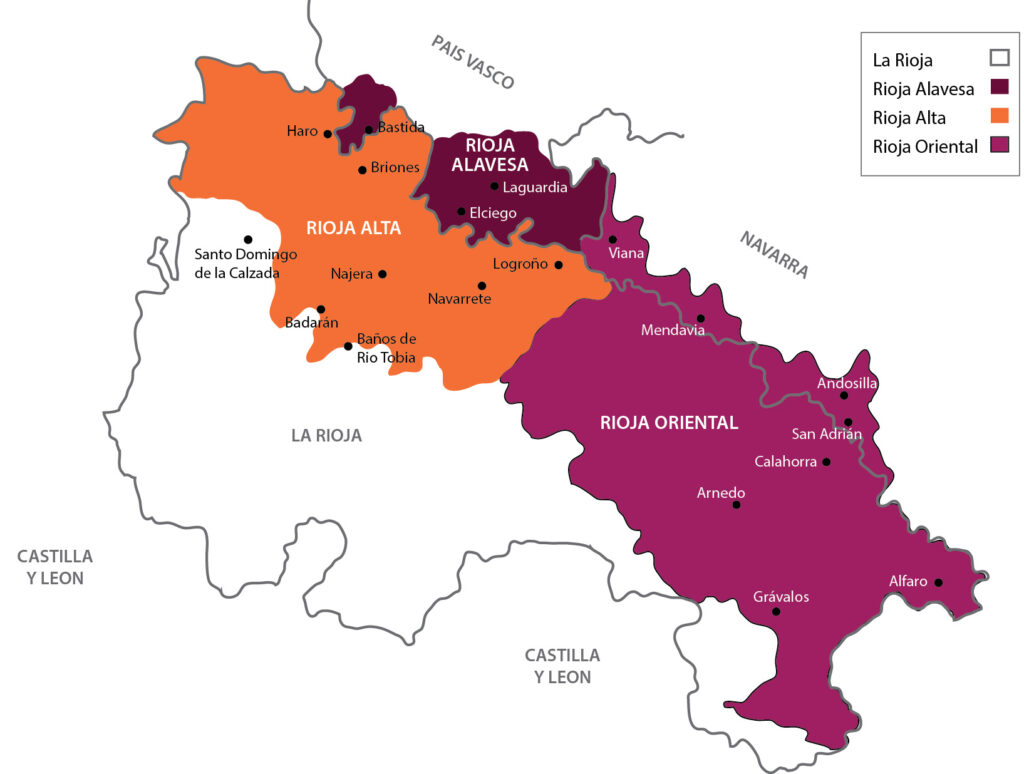
The Rioja wine region lies along the Ebro valley in northern Spain, between the mountain ranges of the Sierra de Cantabria and the Sierra de la Demanda.
Although much of the wine region is within the autonomous community of La Rioja, it also extends into the neighbouring Basque Country and Navarra.
The wine region is divided into three zones: Rioja Alta, Rioja Alavesa and Rioja Oriental. Each has its own landscapes, towns and winemaking traditions.
Throughout this website, we use Rioja to refer to the wider wine region rather than just La Rioja itself.
Where to Stay in Rioja
Choosing where to stay in Rioja depends largely on how you want to spend your holiday.
Haro is a convenient base for visiting traditional wineries, while Logroño offers a greater choice of restaurants, shops and evening entertainment. Laguardia and the surrounding villages are well suited to a quieter stay among the vineyards.
Accommodation ranges from small family-run guest houses and self-catering apartments to boutique hotels and hotels attached to working wineries. Our accommodation guide compares the main towns and villages to help you choose the right base for your visit.
Towns and Villages to Visit in Rioja

Haro
A natural starting point for wine lovers, with historic bodegas clustered around the railway station and a traditional town centre.

Laguardia
A medieval walled town in Rioja Alavesa, known for its underground wine cellars, narrow streets and views across the vineyards.

Logroño
The capital of La Rioja and a lively base for exploring the region, particularly if you enjoy good food and an evening visiting the tapas bars of Calle Laurel.

Elciego
A traditional wine-producing village where historic architecture sits alongside Frank Gehry’s contemporary winery hotel.

Briones
A small hilltop village overlooking the Ebro valley and home to the Vivanco Museum of Wine Culture.

Santo Domingo de la Calzada
A historic stopping point on the Camino de Santiago, with a cathedral, medieval streets and a long association with the pilgrimage route.
Explore Rioja Wines
Rioja produces red, white and rosé wines, although its Tempranillo-based reds remain the best known internationally. Styles range from young, fruit-driven wines to mature reds that have spent several years ageing in oak barrels and bottles.
Understanding the differences between Crianza, Reserva and Gran Reserva can help you choose a wine to suit your taste and budget. Our wine guides introduce the region’s grape varieties, classifications, producers and wines available to buy in the UK.

Buying Rioja Wine in the UK
Our guide to choosing Rioja wines, from affordable everyday reds to traditional Reservas and Gran Reservas.
Includes recommendations and where to buy.
Frequently Asked Questions
Is Rioja the same as La Rioja?
Not quite. La Rioja is an autonomous community in northern Spain, while the Rioja wine region also includes parts of the Basque Country and Navarra. For example, Haro and Logroño are in La Rioja, but Laguardia and Elciego are in the Basque Country.
When is the best time to visit Rioja?
May, June, September and October are generally good months to visit, particularly for exploring towns, walking and visiting wineries. September and October often coincide with the grape harvest, although the exact timing varies each year.
July and August can be hot, while winter is quieter and temperatures can fall below freezing. Some wineries and smaller attractions operate reduced opening hours outside the main tourist season.
Is Rioja worth visiting if you don’t drink wine?
Yes. The region has medieval towns, historic monasteries, museums, mountain walking routes and a rich food culture. The Camino de Santiago also passes through several of its towns, including Logroño, Nájera and Santo Domingo de la Calzada.
How many days do you need in Rioja?
Three or four days will give you time to visit several wineries and explore towns such as Haro, Laguardia and Logroño. A week allows for a more relaxed holiday, with time to visit smaller villages, explore the countryside and enjoy some of the region’s walking routes.
How do you get to Rioja from the UK?
Bilbao is a convenient international gateway for many UK visitors. Santander and Zaragoza may also be worth considering, depending on available flights and where you intend to stay. There are ferry connections from the UK to northern Spain, while Logroño can be reached by train from several Spanish cities, including Madrid.
See our travel guide for more information on getting to Rioja.
Do you need a car in Rioja?
A car is useful if you want to explore smaller villages and rural wineries. However, a holiday without a car is possible, particularly if you stay in Logroño or Haro and use public transport, taxis or organised wine tours.
If you intend to visit several wineries in one day, a guided wine tour with transport included is worth considering.
Do you need to book winery visits in Rioja?
Many wineries require advance reservations for guided tours and tastings, particularly if you want an English-speaking tour. Some have shops or tasting rooms that accept visitors without an appointment. Always check with the individual winery before travelling.